1

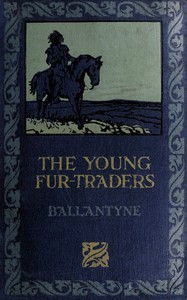
Snowflakes and Sunbeams; Or, The Young Fur-traders: A Tale of the Far North — Story, Setting & Ideas
8
0
Project Gutenberg
2004
Indians of North America -- Juvenile fiction; Fur traders -- Juvenile fiction; Northwest, Canadian -- Juvenile fiction
Readers of public-domain and historical texts
Project Gutenberg digital edition
en
Edition facts
Words: 127,958
Reading time: 557 min
Text sections: 33
Source:
Project Gutenberg record #6357
R.M. Ballantyne's 1856 novel follows young fur-traders Charley and Harry through the Canadian wilderness, contrasting the romance of adventure with the realities of trading-post life, Indigenous relations, and the harsh winter cycle.
Editorial Edition Score
4.9/5
★★★★★
★★★★★
Calculated from edition completeness, EPUB availability, text structure and catalogue metadata. Not a user rating.
Edition quality
Ballantyne opens with a plunge into an arctic winter, immediately establishing the setting as both a physical and narrative frontier. The preface declares an intention to draw an exact copy of the fur-trader's life, and the chapter titles—ranging from wolf-hunts to snow-shoe walks—promise a mix of peril and domestic routine. The text oscillates between the grand wilderness and the cramped confines of York Fort, where clerks are styled 'young gentlemen' and the annual ship is a solitary link to England.
The Rhythm of Isolation and Release
The narrative structure mirrors the seasonal extremes of the fur trade. Harry Somerville's second year at York Fort is marked by a punishing desk schedule during the preparation of annual accounts, followed by a three-week 'glimpse of sunshine' when clerks are permitted to run wild in the swamps and woods. This pattern of confinement and release recurs throughout the excerpts: the winter packet of letters arrives only once, and the depot's inhabitants spend eight months in near-total isolation. Ballantyne uses this rhythm to heighten the emotional stakes of each departure and return, making the reader feel the weight of time passing in a place where 'the only new faces they had any chance of seeing were those of the two men who conveyed the annual winter packet.'
Voices of Restraint and Passion
The dialogue reveals a tension between controlled speech and explosive emotion. When Jacques learns of a murder, he first speaks in measured tones, then suddenly clinches his hands and exclaims that he would have 'fixed' the villain and half the warrior tribe. The narrative notes that his friendship with Redfeather is 'doubly cemented' by this revelation, yet Jacques's response is immediately tempered by gratitude and a comic offer of all his possessions, including his rifle. Ballantyne balances violent impulses with gestures of generosity, suggesting that the wilderness tests but does not erase social bonds. The old fur-trader's attempt to 'fix' his son's flint in Chapter II introduces a father-son dynamic where practical instruction meets stubborn independence.
The Wilderness as a Character
Ballantyne's descriptions treat the landscape as an active force. Autumn passes with ducks and geese departing; swamps freeze and become solid; snow covers 'every vestige of vegetable nature, except the dark fir trees, that only helped to render the scenery more dreary.' The winter settles down 'upon the land' with the weight of an eight-month sentence. Yet the same environment that traps the clerks also offers release: the three-week recreation period involves paddling in Indian canoes, sleeping under pine trees, and spreading 'dismay among the feathered tribes.' The setting is not merely a backdrop but a mechanism that dictates the characters' moods, movements, and relationships. Ballantyne's precise catalogue of seasonal tasks—cutting firewood, installing double window-frames, cutting tracks in the snow—grounds the adventure in the practical realities of survival.
Readers should attend to the way Ballantyne uses chapter titles as promises of action that the narrative sometimes delays or subverts. The preface's claim of an 'exact copy' invites scrutiny of how the novel balances documentary detail with melodrama. The excerpts suggest that the book's pleasures lie less in plot twists than in the accumulation of specific, lived-in moments: a snow-shoe walk at night, a wolf-hunt on the prairies, the arrival of the solitary ship. These are the threads that hold the tale together.
Reader reflection
Before you leave, reflect on the book
Use these questions to collect your thoughts before moving on.
Your progress
0
/
10
2
How did the book work for you overall?
3
Would you encourage someone else to read it?
4
How easy was the book to follow?
5
Do you expect to return to this book?
6
How useful were the ideas in this book?
7
Did the book meet your expectations?
8
How personally connected did you feel to the book?
9
What did this book teach you most?
10