1

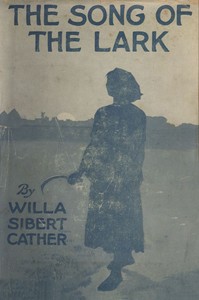
The Song of the Lark — Story, Setting & Ideas
1541
4
Project Gutenberg
2008
Musical fiction; Young women -- Fiction; Bildungsromans; Chicago (Ill.) -- Fiction; Swedish Americans -- Fiction; Colorado -- Fiction; Opera -- Fiction; Children of clergy -- Fiction; Women singers -- Fiction
Readers of public-domain and historical texts
Project Gutenberg digital edition
en
Edition facts
Words: 159,457
Reading time: 694 min
Text sections: 63
Source:
Project Gutenberg record #44
Willa Cather's novel follows Thea Kronborg from her childhood in the fictional Colorado town of Moonstone through her development as an opera singer. The opening introduces Dr. Archie and establishes a precise sense of place, while later excerpts show Thea's restless ambition and her strained return home.
Editorial Edition Score
4.9/5
★★★★★
★★★★★
Calculated from edition completeness, EPUB availability, text structure and catalogue metadata. Not a user rating.
Edition quality
The opening pages of The Song of the Lark introduce Dr. Howard Archie in his Moonstone office, a setting rendered with meticulous attention to material detail: the isinglass sides of the hard-coal burner, the orderly piles under glass weights, the row of thirty or forty volumes bound in mottled board covers. The doctor himself is described with a specificity that signals Cather’s method—his reddish-brown hair, his imperial beard trimmed to resemble Napoleon III, his blue serge suit made by a Denver tailor. This is not a generic small-town doctor; he is a man of contained restlessness, beating a tattoo on his knees, glancing at a locked cupboard. The prose moves from the physical environment to the character’s inner state without commentary, trusting the reader to observe.
A Doctor’s Waiting Room as a World
The first chapter establishes a world through its furnishings. The waiting-room is “carpeted and stiffly furnished, something like a country parlor”; the study has “worn, unpainted floors” but a look of winter comfort. The doctor’s desk is “flat-top,” large and well made, with papers under glass weights. Behind the stove, a bookcase reaches from floor to ceiling, filled with medical books of every thickness and color. On the top shelf sit thirty or forty volumes bound alike in dark mottled board covers with imitation leather backs. This is not mere scene-setting: the precision of the description—the imitation leather, the glass weights—anchors the reader in a specific material culture. The doctor himself is a product of this world: his clothes are noted by traveling men as Denver-made, his hands are “ruggedly formed” with crinkly reddish hair. Cather builds character through environment, and the environment is never vague.
Thea’s Restless Return
Later in the novel, Thea Kronborg returns to her family home and finds it oppressive. The house is “small,” everything “too intimate and mixed up together.” She feels that the battered old furniture and the old carpets “had been nourishing a secret grudge against her.” This is a precise psychological observation, rendered through physical objects. She walks through the empty main street, past closed stores with blinds down. Boys sit on the bank steps telling “disgusting stories because there was nothing else to do.” When she nods to them, they hang their heads. Thea’s body becomes expressive: she walks with a carriage that makes the boys feel she is “stuck up.” The scene is built from small, concrete actions—a nod, a hung head, a held chin—that convey alienation without abstract explanation. Cather trusts the reader to read the body.
Ambition Spoken Aloud
In Dr. Archie’s office, Thea speaks directly about her desires. She says, “To do any of the things one wants to do, one has to have lots and lots of money.” Then, more sharply: “But it’s silly to live at all for little things. Living’s too much trouble unless one can get something big out of it.” Dr. Archie responds, “Living is no trouble for little people, believe me!” The exchange is blunt, almost brutal. Thea pulls her dress lower at the neck as if suffocating and says, “I only want impossible things. The others don’t interest me.” The doctor watches her “as if she were a beaker full of chemicals working.” The metaphor is clinical, fitting his profession, but also reveals his analytical distance. The scene dramatizes a young woman’s ambition as a physical pressure, a kind of suffocation, not a romantic aspiration. The language is direct, the emotion raw, and the setting—the doctor’s lamplit study—contains it without softening it.
Structure and the Reader’s Path
The novel is divided into six parts and an epilogue, with titles that hint at phases: “Friends of Childhood,” “The Song of the Lark,” “Stupid Faces,” “The Ancient People,” “Dr. Archie’s Venture,” “Kronborg.” The excerpts show that Cather moves between close third-person perspectives—first Dr. Archie, then Thea—without announcing the shift. The reader must track the focalization through details: the doctor’s boredom with his keys, Thea’s physical discomfort in her own home. The prose is dense with sensory information but sparse with authorial judgment. The opening’s slow inventory of a doctor’s office prepares the reader for a world where meaning resides in objects and gestures. The later scenes reward that attention: the same lamp, the same desk, the same locked cupboard reappear, now charged with Thea’s presence. The structure invites the reader to observe change over time, not through summary but through recurrence.
Reading The Song of the Lark means attending to the physical world Cather builds—the feel of a serge suit, the look of a locked cupboard, the weight of a glass paperweight. The excerpts suggest that the novel’s drama unfolds in the gap between what characters say and what their environments reveal. Thea’s ambition is not explained; it is shown in her walk, her shrug, her suffocated gesture. The reader who watches the furniture and the hands will find the story there.
Reader reflection
How will you remember this book?
Save your reaction, strongest insight, and memorable passage.
Your progress
0
/
10
2
How did the book work for you overall?
3
Would you recommend this book to another reader?
4
What was the reading difficulty like?
5
Which part made the strongest impression?
6
Did you relate to its people, ideas, or situations?
7
Is this a title worth rereading?
8
Could you apply anything you learned?
9
Which lesson or insight stayed with you?
10