1

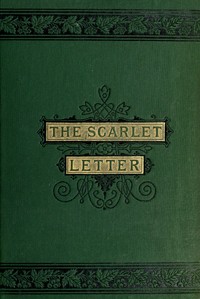
The Scarlet Letter — Reading Companion
471
3
Project Gutenberg
1992
Adultery -- Fiction; Historical fiction; Revenge -- Fiction; Psychological fiction; Married women -- Fiction; Clergy -- Fiction; Triangles (Interpersonal relations) -- Fiction; Illegitimate children -- Fiction; Women immigrants -- Fiction; Puritans -- Fiction; Boston (Mass.) -- History -- Colonial period, ca. 1600-1775 -- Fiction
Readers of public-domain and historical texts
Project Gutenberg digital edition
en
Edition facts
Words: 88,281
Reading time: 384 min
Text sections: 26
Source:
Project Gutenberg record #33
Hawthorne's novel, set in 17th-century Puritan Boston, follows Hester Prynne's public shame for adultery and the hidden guilt of her lover, minister Arthur Dimmesdale, while her vengeful husband, Roger Chillingworth, probes their secret. The excerpts reveal a psychological drama centered on bodily and spiritual disease, with the scarlet letter as a symbol that shifts in meaning.
Editorial Edition Score
4.9/5
★★★★★
★★★★★
Calculated from edition completeness, EPUB availability, text structure and catalogue metadata. Not a user rating.
Edition quality
From its opening pages, The Scarlet Letter announces itself as a work concerned with concealment and revelation. The Custom-House introduction presents a narrator who admits to an "autobiographical impulse" yet insists on keeping "the inmost Me behind its veil." This tension between confession and reserve permeates the novel proper, where public shame and private guilt are constantly at odds. The excerpts show a story less about the act of adultery itself than about the symptoms it produces—bodily decay, obsessive scrutiny, and the slow corrosion of hidden knowledge.
The Body as Evidence
The excerpts repeatedly link spiritual condition to physical manifestation. Roger Chillingworth, the physician, tells Dimmesdale that "a bodily disease" may be "but a symptom of some ailment in the spiritual part." He insists that a hidden "sore place" in the spirit will have "its appropriate manifestation in your bodily frame." This is not merely a metaphor; the novel treats the body as a legible surface. Dimmesdale's hand over his heart, his pale complexion, and his nervous gestures all function as involuntary disclosures. The physician's method is to watch for these signs, turning diagnosis into a form of detection. The reader, too, is invited to read bodies as texts, though the excerpts leave ambiguous whether physical evidence ever yields complete truth.
The Physician's Unreliable Gaze
Roger Chillingworth is cataloged under "Revenge" and "Clergy" (as a foil), but the excerpts show him operating primarily through language. His speech to Dimmesdale is layered with qualifications: "I crave pardon, sir," "if my speech give the shadow of offence." Yet each polite phrase advances a relentless interrogation. He claims to seek the "whole" evil, not merely the outward symptoms, and frames his questions as those of a friend. The minister's outburst—"Who art thou, that meddlest in this matter?"—reveals the intrusion beneath the courtesy. Chillingworth's self-assurance after the confrontation ("We shall be friends again anon") suggests a methodical patience. The excerpts do not confirm his motives as purely vengeful; they present a character who conflates medical inquiry with moral exposure, making his role as "leech" ambiguous.
The Limits of Catalog Subjects
The catalog lists "Adultery," "Revenge," "Triangles (Interpersonal relations)," and "Illegitimate children" as subjects, but the excerpts resist these as primary frames. The adultery is never depicted; its consequences are. The revenge is not yet enacted in the provided passages—only a physician's probing. The "triangle" is barely visible; the excerpts focus on two men in a room. The child Pearl appears only in the table of contents. What the excerpts foreground is a psychological drama of hidden knowledge and its somatic effects. The catalog subjects, while accurate, risk flattening a novel that operates through indirection. The scarlet letter itself is not mentioned in the excerpts; its absence underscores how much of the novel's meaning resides in what is not said.
Readers approaching The Scarlet Letter through these excerpts will find a narrative that proceeds by implication rather than event. Pay attention to what characters refuse to say, to the spaces between their words, and to the physical details that Hawthorne treats as evidence. The novel rewards a suspicious reading—one that, like Chillingworth, watches for symptoms but remains aware that not every sore is laid open.
Reader reflection
How will you remember this book?
Save your reaction, strongest insight, and memorable passage.
Your progress
0
/
10
2
How much did you enjoy the reading experience?
3
How likely are you to recommend this book?
4
Did the language feel accessible?
5
Did any part of the book stay with you emotionally?
6
How did the pace of the book feel?
7
Do you expect to return to this book?
8
How useful did the reading feel?
9
What is the main idea you are taking away?
10