1

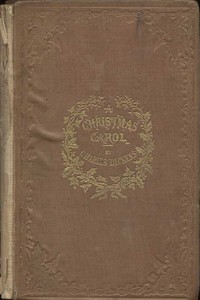
A Christmas Carol in Prose; Being a Ghost Story of Christmas — Reading Notes
17
2
Project Gutenberg
2004
Christmas stories; London (England) -- Fiction; Poor families -- Fiction; Ghost stories; Misers -- Fiction; Sick children -- Fiction; Scrooge, Ebenezer (Fictitious character) -- Fiction
Readers of public-domain and historical texts
Project Gutenberg digital edition
en
Edition facts
Words: 32,520
Reading time: 142 min
Text sections: 4
Source:
Project Gutenberg record #46
Dickens's 1843 ghost story opens with Marley's death, then follows Scrooge through four spirits. The Cratchit family scene shows Tiny Tim's crutch and Bob's tremulous voice. The preface calls it a 'Ghostly little book' meant to haunt pleasantly.
Editorial Edition Score
4.6/5
★★★★★
★★★★★
Calculated from edition completeness, EPUB availability, text structure and catalogue metadata. Not a user rating.
Edition quality
Dickens begins not with a haunting but with a death certificate: 'Marley was dead: to begin with.' The narrator insists on the fact with comic hyperbole—dead as a door-nail—while slyly admitting he does not know what makes a door-nail particularly dead. This playful, digressive voice immediately establishes the story as both a ghost story and a comedy of manners. The preface, dated December 1843, frames the work as a 'Ghostly little book' intended to 'haunt their houses pleasantly,' signaling that the supernatural will serve a moral purpose without souring the reader's mood.
The Narrator's Unreliable Certainty
The opening paragraph performs a strange trick: it asserts absolute certainty about Marley's death while undercutting its own authority. 'There is no doubt whatever about that,' the narrator declares, then immediately questions the simile 'dead as a door-nail,' preferring a coffin-nail but deferring to 'the wisdom of our ancestors.' This self-aware, conversational tone recurs throughout the excerpts. The narrator is not a neutral reporter but a character who jokes, digresses, and addresses the reader directly. When Scrooge later encounters Marley's ghost, the earlier insistence on death becomes ironic—the dead man is very much present. Readers should watch how Dickens uses the narrator's voice to control belief and suspense.
The Cratchit Household: Details That Build Character
The Cratchit family scene is dense with specific, unglamorous details. Mrs. Cratchit lays the cloth 'assisted by Belinda Cratchit, second of her daughters, also brave in ribbons.' Master Peter Cratchit's 'monstrous shirt collar' is actually Bob's property, lent for the day. The two younger Cratchits burst in screaming about the goose they smelled at the baker's. These details do not merely describe poverty; they show how the family makes do—ribbons, a borrowed collar, a shared goose. Tiny Tim's crutch and iron frame are introduced without sentimentality, but Bob's voice trembles when he reports Tim's hope that churchgoers might remember 'who made lame beggars walk.' The physical objects (crutch, collar, ribbons) anchor the emotional weight.
Structure as a Reading Map: Staves and Spirits
The table of contents reveals a deliberate structure: five 'Staves' (not chapters), each named after a spirit or an ending. Stave I introduces Marley's ghost; Staves II–IV present the three spirits; Stave V is 'The End of It.' This musical metaphor—a carol in prose—suggests the story is meant to be heard or performed. The illustrations listed (Marley's Ghost, Mr. Fezziwig's Ball, Ignorance and Want) hint at visual set pieces. Readers encountering the text for the first time can use the stave divisions as natural pauses. Each spirit brings a distinct setting and mood: the first is personal memory, the second is contemporary observation, the third is future dread. The structure itself guides the emotional arc from fear to regret to hope.
The Preface as a Compact with the Reader
Dickens's preface is only four sentences long, but it sets expectations precisely. He calls the book 'Ghostly' and an 'Idea'—not a mere entertainment but a concept meant to haunt. The phrase 'shall not put my readers out of humour with themselves, with each other, with the season, or with me' is a promise: the haunting will be pleasant, not punishing. This is not a horror story but a moral fantasy. The closing wish—'May it haunt their houses pleasantly, and no one wish to lay it'—inverts the typical ghost-story desire for exorcism. Readers should return to this preface after finishing the book to see if Dickens kept his word. The tone is warm, confident, and slightly mischievous, matching the narrator's voice in the opening stave.
Because the excerpts cover only the beginning and a middle scene, the full arc of Scrooge's transformation remains unseen. Readers should pay attention to how Dickens balances the comic narrator with the increasingly somber visions of the spirits. The Cratchit scene, with its precise domestic details, rewards close attention to objects and gestures. The preface and opening stave establish a contract: this ghost story aims to improve, not frighten. Whether it succeeds depends on how the later staves develop the pattern set here.
Reader reflection
What did you think of this book?
Answer a few questions and save a private reflection on this device.
Your progress
0
/
10
2
Was reading this book enjoyable?
3
Would you pass this book on to a friend?
4
How demanding did the text feel?
5
Did the book offer a fresh perspective?
6
How did the pace of the book feel?
7
Did the book give you something worth debating?
8
How well did it match your expectations?
9
What did this book teach you most?
10