1

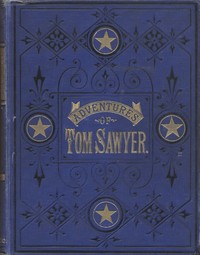
The Adventures of Tom Sawyer, Complete — Reading Notes
20
3
Project Gutenberg
2004
Humorous stories; Bildungsromans; Boys -- Fiction; Male friendship -- Fiction; Adventure stories; Missouri -- Fiction; Sawyer, Tom (Fictitious character) -- Fiction; Child witnesses -- Fiction; Runaway children -- Fiction; Mississippi River Valley -- Fiction
Readers of public-domain and historical texts
Project Gutenberg digital edition
en
Edition facts
Words: 77,710
Reading time: 338 min
Text sections: 39
Source:
Project Gutenberg record #74
This editorial note examines Mark Twain's precise diction, dialogue, and descriptive choices in The Adventures of Tom Sawyer, focusing on how authorial voice shapes the narrative's humor, tension, and moral ambiguity.
Editorial Edition Score
4.9/5
★★★★★
★★★★★
Calculated from edition completeness, EPUB availability, text structure and catalogue metadata. Not a user rating.
Edition quality
Mark Twain's The Adventures of Tom Sawyer opens with a distinctive narrative voice that immediately establishes a wry, intimate tone. The first chapter's title—"Y-o-u-u Tom—Aunt Polly Decides Upon her Duty"—signals both the colloquial speech and the moral undercurrent that runs through the novel. Twain's authorial choices in diction, dialogue, and description create a world where childhood mischief and adult hypocrisy coexist, and where the narrator's knowing asides invite readers to see beyond the surface of events.
The Narrator's Intrusive Voice
Twain's narrator frequently steps back from the action to offer commentary, a technique that shapes the reader's understanding of events. For instance, after describing the boys' pride in their smoking ability, the narrator remarks: "We will leave them to smoke and chatter and brag, since we have no further use for them at present." This casual dismissal underscores the narrator's control over the story and creates a conspiratorial bond with the reader. The phrase "no further use" implies a utilitarian view of characters, as if they are puppets in a larger design. Similarly, when describing the village's mourning for the supposedly dead boys, the narrator notes that the children "had no heart in their sports, and gradually gave them up." The understated language—"no heart" and "gradually gave them up"—conveys genuine grief without melodrama, relying on the reader's empathy to fill the emotional space.
Dialogue as Character Revelation
Twain's dialogue reveals character through vernacular speech and subtle inconsistencies. When Becky Thatcher soliloquizes about Tom, she says: "Oh, if I only had a brass andiron-knob again! But I haven't got anything now to remember him by." The specificity of "brass andiron-knob" grounds her grief in a tangible object, making it more poignant. Later, the boys' conversation about who saw Tom and Joe last is filled with self-importance: "and I was a-standing just so—just as I am now, and as if you was him—I was as close as that—and he smiled, just this way." Twain captures the children's earnestness and their tendency to embellish, using repetition and broken syntax to mimic natural speech. The line "Well, Tom Sawyer he licked me once" shows how even a negative memory becomes a claim to distinction, revealing the social dynamics of the village.
Descriptive Economy and Moral Ambiguity
Twain's descriptions often carry moral weight through understatement. The village on the Saturday of the boys' disappearance is described as "ordinarily quiet enough, in all conscience," a phrase that subtly critiques the town's usual placidity. The tolling bell on Sunday is "a very still Sabbath, and the mournful sound seemed in keeping with the musing hush that lay upon nature." The word "musing" personifies nature, suggesting a reflective quality that mirrors the villagers' thoughts. Twain avoids explicit moral judgment; instead, he lets the setting and actions speak. When the boys smoke and feel "prouder and happier in their new acquirement than they would have been in the scalping and skinning of the Six Nations," the hyperbolic comparison to violence highlights their innocence while also hinting at darker impulses. The narrator's deadpan delivery leaves the reader to decide whether this is harmless fun or a troubling sign.
Structure and Pacing: The Art of the Chapter Break
Twain's chapter titles and transitions reveal a careful attention to pacing and suspense. Chapter titles like "Tom as a General—Triumph and Reward—Dismal Felicity—Commission and Omission" juxtapose contrasting moods, preparing the reader for shifts in tone. The final line of Chapter XVI—"We will leave them to smoke and chatter and brag, since we have no further use for them at present"—serves as a deliberate pause, cutting away from the boys' jubilation to the somber opening of Chapter XVII: "But there was no hilarity in the little town." This abrupt contrast heightens the emotional impact, forcing the reader to hold both scenes in mind. The structure itself becomes a commentary on the gap between private experience and public perception, a theme that recurs throughout the novel.
Readers attentive to Twain's authorial choices will find a novel that rewards close reading. The narrator's wry asides, the precision of dialogue, and the deliberate pacing all contribute to a work that is both a humorous adventure and a subtle critique of small-town life. By observing how Twain uses language to shape character and mood, one can appreciate the craft behind the seemingly effortless storytelling.
Reader reflection
How did this book work for you?
Your answers remain private and are stored only in this browser.
Your progress
0
/
10
2
Did this book hold your interest?
3
How likely are you to recommend this book?
4
How easy was the book to follow?
5
How useful did the reading feel?
6
How strong was your personal connection to the text?
7
Could you follow the author’s main argument?
8
How strongly did the book affect you emotionally?
9
Which lesson or insight stayed with you?
10