1

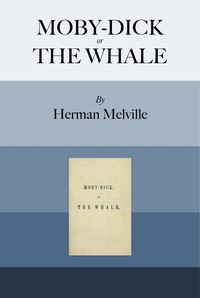
Moby-Dick; or, The Whale — Story, Setting & Ideas
700
2
Project Gutenberg
1991
Whaling -- Fiction; Sea stories; Psychological fiction; Ship captains -- Fiction; Adventure stories; Mentally ill -- Fiction; Ahab, Captain (Fictitious character) -- Fiction; Whales -- Fiction; Whaling ships -- Fiction
Readers of public-domain and historical texts
Project Gutenberg digital edition
en
Edition facts
Words: 222,826
Reading time: 969 min
Text sections: 138
Source:
Project Gutenberg record #15
An editorial note examining how Melville's catalog subjects—whaling, ship captains, psychological fiction—align with the text's actual focus on the physical and philosophical entanglements of whaling, as seen in the detailed description of the whale-line and its implications.
Editorial Edition Score
4.9/5
★★★★★
★★★★★
Calculated from edition completeness, EPUB availability, text structure and catalogue metadata. Not a user rating.
Edition quality
Herman Melville's Moby-Dick; or, The Whale is cataloged under subjects including whaling, sea stories, and psychological fiction, but the excerpts reveal a work that resists easy categorization. The opening chapters, such as "Loomings" and "The Spouter-Inn," establish a narrator who is both observer and participant, while later sections like "The Line" demonstrate Melville's method of embedding metaphysical reflection within technical exposition. The catalog subjects accurately signal the maritime setting and the presence of Captain Ahab, but they do not capture the book's sustained attention to the physical details of whaling—ropes, boats, and the labor of the crew—as a vehicle for exploring human peril and habit.
The Whale-Line as Metaphor and Reality
The excerpt from "The Line" offers a concentrated example of how Melville intertwines practical instruction with existential commentary. The description of the whale-line—"coiled upon the box in the bows" and "folding the whole boat in its complicated coils"—is precise enough to serve as a manual for the mechanics of whaling. Yet Melville immediately shifts to the line's symbolic weight: "All men live enveloped in whale-lines. All are born with halters round their necks." This dual function is characteristic of the book's method. The catalog subject "whaling" is accurate but reductive; the text uses whaling gear not merely as setting but as a recurring figure for the conditions of mortal life. The passage also demonstrates Melville's voice—colloquial, learned, and darkly humorous—as when he compares the crew to "Indian jugglers" with snakes, or notes that "gayer sallies" are heard in the whale-boat than over mahogany. The excerpt does not resolve whether the line is primarily a physical danger or a philosophical emblem; it insists on both.
Habit and Terror in the Whale-Boat
Melville's treatment of the crew's response to danger complicates the catalog subject of "adventure stories." In the same excerpt, he observes that "habit—strange thing! what cannot habit accomplish?"—a remark that undercuts the idea of adventure as pure thrill. The men joke and jest while seated amid "hempen intricacies" that could at any moment become "ringed lightnings." This juxtaposition of terror and familiarity is not presented as heroism but as a psychological accommodation. The narrator notes that a landsman, on first sitting in the boat, cannot help but "shudder that makes the very marrow in his bones to quiver," yet the experienced crew treats the peril with casual humor. The passage thus aligns more closely with the catalog subject "psychological fiction" than with straightforward adventure. Melville is interested in how the mind processes danger, not merely in the danger itself. The excerpt does not show Ahab or the white whale; it focuses on the ordinary, repeated risks of whaling, suggesting that the book's psychological depth extends beyond its central antagonist.
The Limits of Catalog Subjects
The catalog lists "Ahab, Captain (Fictitious character) -- Fiction" and "Whales -- Fiction," but the excerpts provided do not include Ahab or Moby Dick. Instead, they center on the narrator's voice and the collective experience of the crew. This discrepancy highlights a limitation of subject headings: they often emphasize the most memorable elements—the monomaniacal captain, the legendary whale—while the text devotes substantial space to digressions on cetology, the social dynamics of the ship, and the physical processes of whaling. The excerpt from "Stubb Kills a Whale" (Chapter LXI) is similarly telling: it begins with Queequeg's interpretation of the squid as a sign of sperm whales, then shifts to the "vacant sea" and the crew's drowsiness. The actual killing is not described in the excerpt. The catalog subject "Whaling ships -- Fiction" is accurate but broad; the excerpts show that the ship, the Pequod, functions as a stage for a wide range of discourses, from technical to philosophical. Readers expecting a focused narrative of Ahab's quest will find instead a book that often delays or subordinates that plot.
Readers approaching Moby-Dick through its catalog subjects should be prepared for a work that is as much about the texture of whaling life as about its central conflict. The excerpts suggest that the book's power lies in its ability to make the mundane—coils of rope, the drowsy sea—into occasions for reflection on habit, peril, and mortality. The catalog subjects provide a useful entry point, but the text itself continually exceeds them, demanding attention to its digressions and its meticulous attention to the material world.
Reader reflection
How did this book work for you?
Your answers remain private and are stored only in this browser.
Your progress
0
/
10
2
Did this book hold your interest?
3
Would you recommend this book to another reader?
4
How much effort did this book require?
5
Did the book deliver what you hoped for?
6
Did this book create an emotional response?
7
Which part made the strongest impression?
8
Did the book give you something worth debating?
9
In one sentence, what did you learn?
10